The modern industrial facility is a complex ecosystem of moving parts, heavy machinery, and constant logistical orchestration. For logistics directors and facility managers, keeping this ecosystem functioning smoothly is a monumental task. The reality of the job often involves a ringing phone, an inbox full of urgent work orders, and the constant pressure of minimizing operational downtime. One of the most significant pain points in this environment is the sheer chaos of vendor sprawl. When you rely on dozens of different specialized contractors to keep your building and vehicles operational, you inadvertently create administrative bloat. Managing separate invoices, tracking varying service level agreements, and coordinating overlapping dispatch times across a massive list of third-party providers drains time and resources that should be focused on core operations.
This fragmented approach to maintenance often leads to dangerous gaps in service and unexpected, costly bottlenecks. If your facility operates with isolated silos of maintenance—where the team fixing the building structure never communicates with the team fixing the rolling assets—you lose the ability to forecast breakdowns accurately. The alternative is a strategic shift toward consolidation. Streamlining your vendor relationships and moving toward single-source or bundled maintenance providers is not just a cost-saving measure; it is a fundamental upgrade to your operational efficiency.
By actively auditing your current contracts and grouping similar facility and operational systems under unified umbrellas, you can drastically reduce your administrative overhead. Consolidated partnerships improve accountability, guarantee faster response times during emergencies, and allow for volume-based pricing that protects your bottom line. This guide will walk you through a comprehensive, step-by-step strategy for auditing your current maintenance contracts, grouping your critical infrastructure, and building a unified, highly efficient vendor ecosystem that keeps your facility running at peak performance.
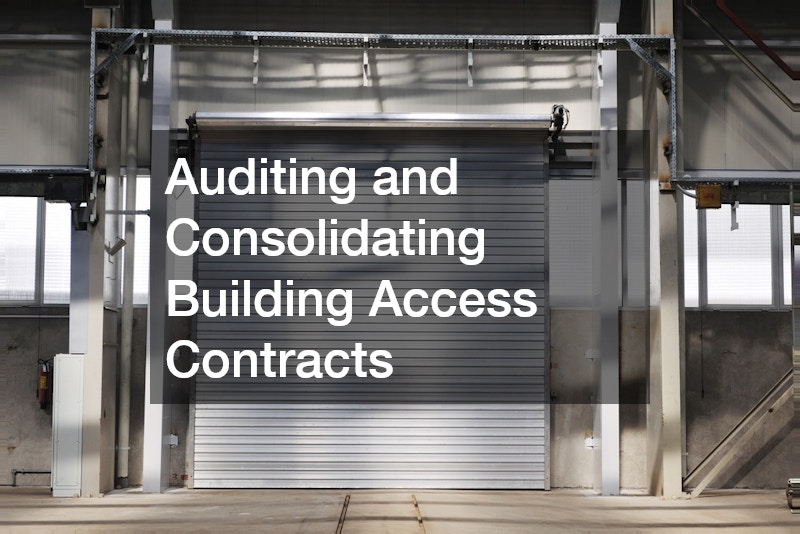
Auditing and Consolidating Building Access Contracts
The perimeter of your facility is the primary artery for your business. Every piece of inbound freight and outbound cargo must pass through your facility’s entryways. When these access points fail, the entire supply chain within your warehouse grinds to a halt. Managing the upkeep of these critical junctions is often the first place facility managers realize they have a vendor management problem.
Grouping Large-Scale Entryway Assessments
It is incredibly inefficient to hire one company to service your standard loading docks and completely different, isolated contractors to handle specialized or oversized entryways. This disjointed approach means paying multiple dispatch fees, managing conflicting maintenance schedules, and dealing with varying levels of quality control. The goal should be to audit your current list of structural vendors to find a cross-trained, comprehensive provider capable of managing every access point on your blueprint.
-
Evaluate Cross-Competency: Look for a single building services partner equipped to handle everything from a standard commercial garage door to specialized, massive entryways. Many top-tier industrial structural partners possess the engineering background and certifications needed for complex hangar door repair services, meaning they can service your standard shipping docks and your oversized equipment bays during a single site visit.
-
Consolidate Preventative Maintenance Schedules: Instead of having three different companies visit your site on three different days to lubricate tracks, test tension springs, and check motorized openers, schedule one comprehensive monthly perimeter sweep.
-
Standardize Security Protocols: A unified vendor means fewer third-party contractors wandering your facility. You can rigorously vet one team, issue them standardized security badges, and ensure they fully understand your site-specific safety compliance rules.
Negotiating Unified Response Times
When an entryway fails, you are immediately losing money. A stuck door exposes your inventory to weather damage, compromises building security, and traps rolling assets. When negotiating with a consolidated building access vendor, establishing a single, facility-wide Service Level Agreement (SLA) is critical.
-
Establish Tiered Priority Levels: Work with your vendor to define exactly what constitutes a high-priority emergency versus a standard maintenance request.
-
Demand Universal Dispatch Times: Ensure your contract explicitly states that any perimeter breach—regardless of the door’s size or mechanism—is treated with the exact same emergency priority. You should expect a guaranteed response time of under two hours for any critical structural failure.
-
Penalties for Non-Compliance: A consolidated SLA should include clear financial penalties if the vendor fails to meet the agreed-upon response times. This keeps your partner accountable and ensures your facility is never left vulnerable.
Standardizing Upkeep for Material Handling and Vertical Transport
Once your facility’s perimeter is secured and optimized, you must turn your attention to the internal movement of goods. Whether moving pallets horizontally across the warehouse floor or lifting freight vertically between levels, the machinery that handles your materials is the lifeblood of your daily throughput. Fragmented maintenance in this sector leads to stranded inventory and dangerous work environments.
Integrating Machinery Care into One Management Dashboard
The most effective way to streamline vendor communication for internal machinery is to implement a robust Computerized Maintenance Management System. A CMMS acts as a centralized digital brain for your facility’s health.
-
Centralized Ticketing: Instead of warehouse staff calling a specialized contractor when a pallet jack breaks and calling a different company when a freight lift stalls, all requests go into a single digital portal.
-
Bridging Structural and Mobile Asset Care: While structural elevator maintenance requires highly specialized, often state-mandated technicians, and floor-level forklift repairs involve heavy-duty mechanics, managing their preventative schedules through a single partnered logistics vendor or management portal drastically reduces administrative oversight. You can track the lifecycle, repair history, and associated costs of all lifting equipment in one place.
-
Predictive Analytics: By running all material handling work orders through one system with a partnered vendor, you can start identifying failure trends. If one specific warehouse zone experiences constant equipment breakdowns, your vendor can help you identify if the issue is mechanical or operator-induced.
Shifting from Reactive Fixes to Preventative Partnerships
The traditional approach to material handling maintenance is deeply reactive: wait for a machine to break, lock it out, tag it out, and call for emergency help. This is the most expensive way to manage equipment.
-
Quarterly System Audits: Sit down with your unified material handling vendor to transition away from emergency call-outs. Establish a comprehensive, quarterly preventative sweep.
-
Simultaneous Servicing: Have the vendor send a multi-disciplinary team to your site. While one technician inspects the cables, pulleys, and structural integrity of your vertical lifts, another can change fluids, check hydraulics, and test the batteries on your rolling floor equipment.
-
Uptime Guarantees: A strong vendor partnership should come with an uptime guarantee. Because they are performing the preventative maintenance, they should be willing to guarantee that your internal lifting equipment will be operational for a set percentage of the year, mitigating your risk of internal bottlenecks.
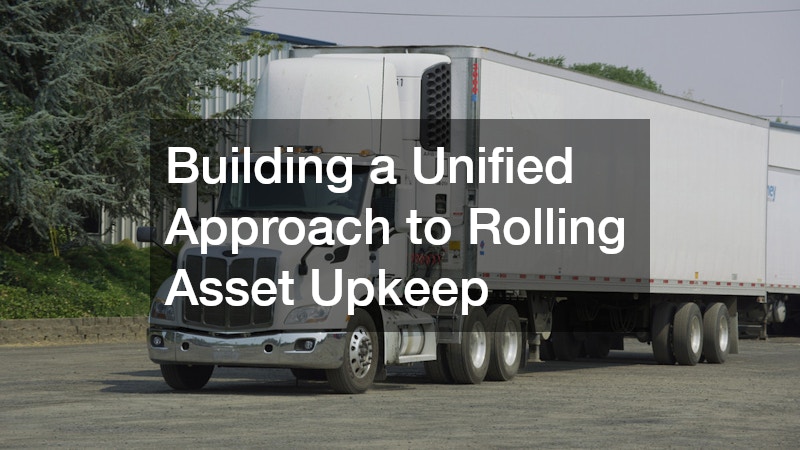
Building a Unified Approach to Rolling Asset Upkeep
For many industrial facilities, operations do not stop at the loading dock. Managing an outbound logistics fleet is a massive undertaking, and vehicle maintenance is traditionally one of the most fragmented and difficult areas to control. Relying on random highway shops, piecemeal mechanic networks, and driver-initiated fixes creates a logistical nightmare for accounting and safety compliance directors.
Transitioning to a Single-Source Transport Partner
The financial drain of relying on decentralized, ad-hoc mechanical shops whenever a breakdown occurs is immense. You pay retail pricing for parts, suffer through unpredictable labor rates, and have zero leverage to demand priority service.
-
Comprehensive Service Contracts: It is vital for logistics managers to lock in broad fleet repair services that cover the entire lifespan and variety of their vehicles. A single-source provider acts as your external fleet management arm, tracking every vehicle by its Vehicle Identification Number and logging every oil change, brake job, and transmission rebuild.
-
Handling Heavy-Duty Needs: Your chosen partner must have the scale and expertise to manage everything from routine DOT inspections to complex, heavy-duty semi truck repair without needing to sub-contract the work to a third party. If a vendor has to outsource engine teardowns because they only handle light maintenance, they are not a true single-source partner.
-
Leveraging Volume Discounts: When you bring your entire rolling stock to one vendor, you gain immense negotiating power. You can demand fixed labor rates, standardized markups on parts, and guaranteed priority bays when your vehicles need emergency attention.
Establishing Dedicated On-Site Maintenance Days
One of the largest hidden costs in fleet management is the time vehicles spend deadheading—driving empty—to and from off-site mechanic shops. Every hour a driver spends sitting in a waiting room is an hour of lost revenue.
-
Mobile Mechanic Dispatch: Negotiate with your consolidated vendor to utilize mobile mechanic units. Have them send fully equipped service trucks directly to your terminal during your fleet’s off-hours or scheduled downtime.
-
Yard Sweeps: Implement a scheduled “yard sweep” where technicians walk your parked fleet to check tire pressures, top off fluids, inspect brake lines, and replace burnt-out lights before the vehicles are ever dispatched.
-
Maximizing Driver Hours: By bringing the maintenance to the facility, you preserve your drivers’ strictly regulated Hours of Service. Drivers can arrive at the terminal, step into a fully serviced, compliant vehicle, and immediately hit the highway.
Centralizing Preventative Care for Heavy Haulers and Lifting Mechanisms
Managing the tractors is only half the battle. The trailers, chassis, and complex lifting attachments hauled by your fleet require incredibly specialized attention. Unfortunately, this is an area where vendor management often splinters. A facility might use one shop for the trailer body and a completely different hydraulic specialist for the moving attachments. This disconnect creates dangerous liability gaps and unnecessary delays.
Managing High-Stress Components Through Dedicated Specialists
Trailers endure massive physical stress. The suspension systems, air brakes, landing gear, and attached liftgates are subjected to constant vibration, heavy loads, and extreme weather. When you fragment the servicing of these components, you risk critical failures.
-
Holistic Trailing Equipment Servicing: It is highly recommended to find a heavy-duty partner capable of handling an overarching tractor trailer repair while simultaneously possessing the specialized fluid dynamics expertise required to service the attachments.
-
Concurrent Inspections: If a trailer comes into the bay with a damaged roof bow or a bent axle, the technicians should not just fix the structural issue and send it out. A consolidated vendor will use that downtime to proactively perform intricate hydraulic repair on the automated liftgates and pneumatic landing gear during the exact same visit.
-
Reducing Liability: When one vendor is responsible for the entire trailing unit, there is no finger-pointing if a failure occurs on the road. The vendor takes full ownership of the unit’s roadworthiness, significantly reducing your legal and operational liability.
Standardizing Parts Ordering and Inventory
One of the greatest benefits of centralizing your heavy hauling maintenance is the ability to streamline the parts supply chain. When multiple vendors service your equipment, they often use different brands of replacement parts, leading to a mismatched, confusing inventory.
-
Uniform Component Replacement: Work with your vendor to standardize the exact brands of brake pads, air hoses, fluid lines, and suspension airbags used across your entire fleet.
-
Stocking High-Tension Spares: Using fewer vendors allows a facility to confidently stock standardized replacement parts on-site. You can keep specific high-wear items in your own warehouse, allowing your unified vendor to immediately access the parts they need when they arrive for a service call, rather than waiting days for a specialized component to ship.
-
Warranty Tracking: A unified parts strategy makes tracking warranties incredibly simple. If a specific brand of actuator fails prematurely across multiple trailers, your vendor can easily pull the data, file a mass warranty claim, and transition the fleet to a more durable component without you having to dig through years of scattered invoices.

Simplifying General Delivery Support and Load Securing
Vendor consolidation should never stop at the heavy machinery and structural building elements. The “last mile” operations, ancillary support vehicles, and cargo protection mechanisms are just as vital to your company’s reputation and bottom line. Overlooking these lighter-duty elements can lead to ruined cargo, missed local deliveries, and unhappy clients.
Bundling Light-Duty and Ancillary Fixes
Many massive industrial facilities hyper-focus on their heavy-duty rigs but completely neglect the maintenance strategy for their local delivery step-vans, supervisor pickup trucks, and flatbed load-securing equipment.
-
Inclusive Fleet Contracts: When finalizing your unified transportation contracts, ensure your primary mechanical partner also handles standard, light-duty truck repair services for your local dispatch vans. You should not have to take your heavy haulers to an industrial specialist and your local delivery vans to a retail auto shop. A true fleet partner handles the entire spectrum of your vehicles.
-
In-House Cargo Protection Services: Flatbed operations rely heavily on canvas covers and mechanized rolling tarp systems to protect expensive freight from rain, snow, and road debris. Look for a consolidated vendor that has an in-house division or a direct, tightly managed partnership for quick, durable tarp repair. Waiting a week for a specialized canvas shop to patch a cover means that flatbed trailer cannot legally or safely transport weather-sensitive freight, rendering the asset useless.
-
Streamlined Ancillary Billing: By bundling these light-duty and cargo protection services into your primary mechanical contract, you eliminate dozens of small, frustrating invoices each month. Your accounting department receives one itemized statement that covers everything from a rebuilt diesel engine down to a patched canvas cover and a local van’s oil change.
Creating a Quarterly Vendor Performance Review
Consolidating your vendors is not a set-it-and-forget-it process. To ensure this streamlined approach is actively benefiting your facility, you must institute a rigorous evaluation protocol. A consolidated vendor has a significant portion of your operational budget; they must consistently prove their value.
-
Establish Key Performance Indicators (KPIs): Before signing a consolidated contract, agree on specific metrics. Track their average response time to emergency call-outs, their first-time fix rate (how often they fix the problem on the first visit without needing to return with different parts), and the overall preventative maintenance compliance rate.
-
The Quarterly Review Meeting: Give readers a framework for a mandatory quarterly review meeting with the vendor’s account manager. Use this time to look over the CMMS data together.
-
Continuous Improvement: Use the data to push for better service. If the data shows that local delivery vans are consistently breaking down despite routine servicing, demand a new maintenance protocol. If emergency response times at the loading docks are slipping past the SLA limits, enforce the financial penalties negotiated in your contract. A streamlined vendor relationship should be a true partnership focused on continuous, measurable operational improvement.
Conclusion
Overhauling a sprawling, chaotic vendor list is not an overnight task, but the long-term operational and financial rewards are undeniable. The core benefits of vendor consolidation—processing significantly fewer invoices, building stronger and more accountable relationships with key contractors, securing volume-based cost reductions, and achieving vastly faster response times during critical emergencies—directly impact a facility’s profitability. When you stop managing dozens of disjointed contractors, you free up your management team to focus on strategic growth, employee safety, and increasing daily logistical throughput.
It is completely normal to feel overwhelmed by the prospect of changing long-standing maintenance protocols. You do not need to fire every secondary contractor tomorrow. The most successful facility managers tackle this process systematically, usually addressing one operational department at a time. By prioritizing the areas that cause the most downtime or generate the highest volume of separate invoices, you can slowly but surely transition into a highly optimized, smoothly running operation.
Take the first step this week. Pull your facility’s maintenance spending reports from the last six months and identify your top three most heavily utilized contractors. Look at the scope of their work and ask yourself: could these services be bundled? By analyzing this data, you will find the perfect starting point to begin streamlining your local vendor management and reclaiming control over your facility’s maintenance strategy.