Purchasing or holding an aging commercial building presents a massive financial opportunity, but it also carries the inherent risk of turning into a catastrophic money pit if renovations are poorly planned. In today’s highly competitive real estate market, prospective leaseholders are incredibly discerning. The reality is that applying surface-level cosmetic fixes—like slapping a fresh coat of paint over cracked drywall or rolling out new carpet in the lobby—will not attract premium tenants or allow you to command higher lease rates if the building’s underlying bones are actively failing. Corporate tenants are looking for reliability, safety, efficiency, and modern amenities, all of which require a structurally and mechanically sound foundation.
A successful, highly profitable commercial renovation requires a strict, systematic approach that completely disregards the temptation to focus on aesthetics first. You must prioritize code-compliant infrastructure, rigorous life-safety systems, and modern security before you ever touch the final cosmetic details. If you install luxury finishes before addressing a leaking roof or an overloaded electrical panel, you will inevitably end up tearing down your expensive new drywall to fix the hidden disasters lurking behind it.
This comprehensive guide will walk you through the precise phases of the renovation journey. Starting from the invisible electrical and plumbing baselines, moving through critical life-safety and environmental controls, and finishing with exterior security and aesthetic upgrades, you will learn exactly how to transform a dilapidated older property into a highly sought-after, premium commercial space.
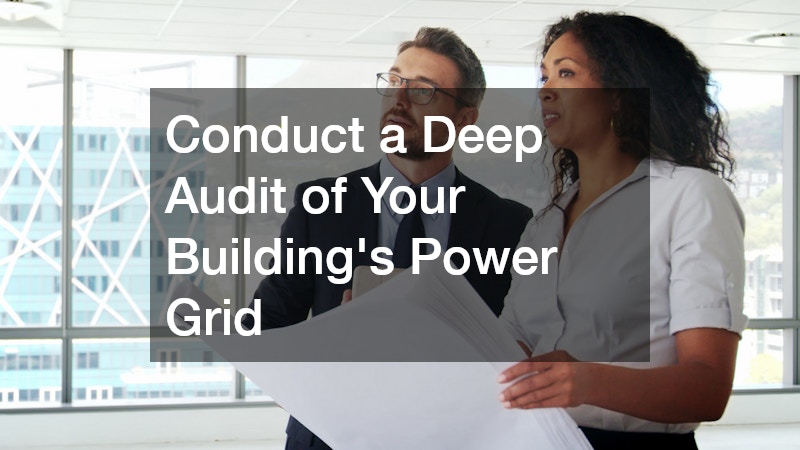
Conduct a Deep Audit of Your Building’s Power Grid
When dealing with a property constructed decades ago, one of the most critical realizations you must face is that the building was simply not designed to handle the massive energy demands of modern commerce. Thirty years ago, an office space required enough power for basic overhead lighting, typewriters, and a handful of early desktop computers. Today, that same square footage must support dense server rooms, high-tech manufacturing equipment, electric vehicle charging stations in the parking lot, and hundreds of personal electronic devices simultaneously drawing power. If you attempt to plug a modern, tech-heavy tenant into a vintage power grid, you will experience constant breaker trips, overheated wires, and severe fire hazards.
To mitigate this massive liability, your very first step in the renovation process is to bring the grid up to modern code. This requires bringing in a highly qualified commercial electrician during the initial discovery phase, long before any cosmetic demolition begins. They must assess the main breaker panels, locate any dangerous, outdated aluminum wiring that needs to be completely stripped out, and ensure that the entire building is grounded correctly according to current municipal codes. They will also perform a comprehensive load calculation to determine the maximum amperage the current drop from the utility company can safely provide.
Furthermore, you must proactively plan for the specific needs of your target demographic. Upgrading your building’s commercial electrical services early in the demolition phase prevents incredibly costly tear-outs later on. If you wait until the drywall is hung and finished to realize a tenant needs specialized 220-volt outlets for their server racks, you will be paying double for the labor to rip open the walls and patch them back up.
-
Request Thermal Imaging: Have your contractor use infrared cameras on all main distribution panels to identify “hot spots” where failing breakers or loose connections are generating dangerous levels of heat.
-
Audit Sub-Panels: Ensure that each tenant suite has its own dedicated, modernized sub-panel. This allows for accurate, individualized utility sub-metering, which is a massive selling point for tenants who want to control their own overhead costs.
-
Plan for Data Infrastructure: Electrical work is no longer just about voltage. Use the open-wall phase to run low-voltage conduit and high-speed fiber optic cables to every suite, future-proofing the building for tech companies.
-
Remove Abandoned Wiring: Older buildings are notorious for housing miles of “dead” cables in the drop ceilings from previous tenants. Stripping this out reduces the fire load and makes future troubleshooting significantly easier.
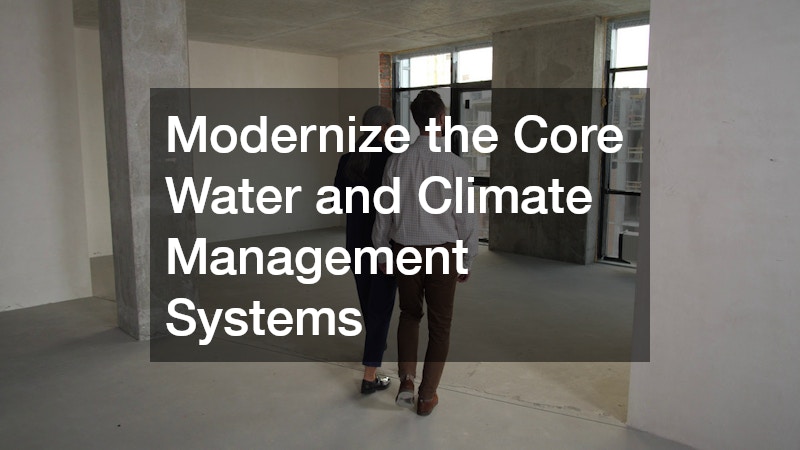
Modernize the Core Water and Climate Management Systems
Once the electrical baseline is established, your attention must pivot to the mechanical systems that dictate the physical comfort and operational safety of the building. Aging pipe networks are a silent threat that can destroy a newly renovated property overnight. Cast-iron sewer lines and galvanized steel water supply pipes from the mid-twentieth century have a finite lifespan. They corrode from the inside out, restricting water pressure and creating incredibly weak pipe walls that are prone to sudden, catastrophic ruptures.
Do not wait for a pipe to burst on a Friday night to address this issue. Bringing in a reputable commercial plumbing company to hydro-jet the main sewer lines, run high-definition diagnostic cameras down the drains, and potentially replace the main vertical risers is significantly cheaper than dealing with a flooded building after your new tenants have moved in their expensive equipment. In many cases, if the existing pipes are structurally sound but aging, they can be lined with an epoxy resin, saving you from having to jackhammer the concrete foundation.
Equally important to the water supply is the climate management system. Modern tenants demand highly customized, energy-efficient climate control. A massive, single-zone system from the 1980s that blasts freezing air into empty conference rooms while leaving corner offices sweltering will drive up utility costs and cause endless tenant disputes. To solve this, you must consult with top-tier commercial HVAC contractors to design a system that divides the building into multiple, independently controlled thermal zones.
-
Upgrade to Variable Refrigerant Flow (VRF): Consider installing VRF systems, which are incredibly energy-efficient and allow different zones within the same building to be heated and cooled simultaneously, catering to individual tenant preferences.
-
Focus on Indoor Air Quality (IAQ): Post-pandemic, premium tenants demand superior air quality. Upgrade your filtration systems to MERV 13 or higher, and consider installing UV-C light purifiers inside the ductwork to neutralize airborne pathogens before they circulate through the building.
-
Install Smart Thermostats: Integrate building-wide, Wi-Fi-enabled thermostats that property managers can monitor remotely. These systems can learn occupancy patterns and automatically reduce energy consumption during off-hours or weekends.
-
Inspect and Seal Ductwork: Pumping expensive, treated air through leaky, thirty-year-old sheet metal ducts is a massive waste of capital. Have all accessible ductwork aerosealed and heavily insulated to prevent thermal loss.
Prioritize Tenant Safety, Accessibility, and Business Continuity
A beautifully renovated building is entirely useless if it is not legally accessible or safe for its occupants. Municipal codes regarding the Americans with Disabilities Act (ADA) and life-safety protocols are strictly enforced, and ignoring them exposes you to massive fines and crippling lawsuits. Your renovation budget must heavily prioritize bringing all vertical transport systems up to current code.
Older multi-story buildings often house outdated lift systems that are slow, prone to breaking down, and fail to meet modern accessibility dimensions. Modernizing the cabs, cables, and mechanical rooms of aging commercial elevators is a non-negotiable step to ensure smooth, safe, and legally compliant transport for all occupants. This includes upgrading the emergency communication panels inside the cabs, ensuring the doors have modern infrared safety sensors, and updating the dispatch software to reduce wait times during peak morning and evening hours.
Beyond accessibility, you must establish robust fail-safes for power outages. Premium corporate tenants—whether they are medical facilities handling refrigerated vaccines or tech firms managing cloud servers—cannot afford downtime during grid failures or severe weather events. If your building loses power and their operations halt, they will look for a new lease elsewhere. Guaranteeing uninterrupted operations is a massive competitive advantage. You must ensure your backup power sources are regularly load-tested to verify they can handle the building’s emergency circuits. If the building already has a backup system, scheduling preventative commercial generator repair and routine maintenance long before storm season hits is a critical selling point that justifies top-of-market lease rates.
-
Conduct a Full ADA Audit: Hire an accessibility consultant to evaluate everything from hallway widths and bathroom turning radiuses to the height of light switches and the slope of entrance ramps.
-
Upgrade Fire Suppression: Inspect the existing sprinkler heads and ensure they provide adequate coverage for modern, open-concept office layouts. Coordinate with the fire marshal to test the central fire alarm control panel.
-
Test Emergency Egress Lighting: Ensure that all stairwells and exit corridors are equipped with battery-backed emergency lighting that automatically illuminates during a grid failure, guiding occupants safely out of the building.
-
Establish a Generator Fuel Strategy: If you have diesel backup power, ensure the fuel is regularly polished to prevent sludge buildup, and establish a guaranteed delivery contract with a local fuel supplier in the event of a prolonged, multi-day blackout.
Fortify the Building Envelope and Entryways
With the internal infrastructure stabilized and life-safety systems modernized, you can begin fortifying the exterior envelope of the property. The building envelope is the physical separator between the conditioned indoor environment and the unconditioned outdoor environment, encompassing the roof, walls, and specifically, the windows. Outdated, single-pane windows are a massive liability. They drastically increase heating and cooling costs by allowing extreme thermal transfer, they let in harmful UV rays that fade interior finishes, and they make the building look distinctly dated from the street.
Budgeting for comprehensive, energy-efficient commercial glass replacement is one of the highest-ROI upgrades you can make. Installing double or triple-pane glass with low-emissivity (Low-E) coatings instantly modernizes the facade, drastically reduces street-level noise pollution, and cuts down on the energy required to maintain a comfortable indoor climate. This upgrade alone can completely alter how the building is perceived by pedestrians and prospective tenants alike.
Simultaneously, you must implement smart access control strategies to secure these newly upgraded entryways. Physical security is a top priority for modern businesses, and relying on easily duplicated brass keys is no longer acceptable. Transitioning to a modernized security infrastructure requires bringing in a specialized commercial locksmith to evaluate and upgrade every point of entry. They will replace outdated deadbolts with electronic keycard readers or biometric scanners, install high-security crash bars on all emergency fire exits to ensure they latch securely from the outside while allowing rapid egress from the inside, and establish a tightly restricted master key system exclusively for property management and emergency personnel.
-
Audit Perimeter Hardware: Check every single exterior door hinge, closer, and threshold. A heavy security door is useless if the pneumatic closer is broken and leaves the door propped open after someone walks through.
-
Implement Cloud-Based Access Control: Install a security system that allows property managers to instantly grant or revoke building access via a smartphone app, eliminating the need to re-key the entire building when a disgruntled employee leaves.
-
Upgrade Exterior Lighting: Security starts in the parking lot. Replace dim, yellow sodium-vapor exterior lights with bright, motion-activated LED fixtures to eliminate dark corners and deter vandalism.
-
Install Protective Window Films: If full window replacement is outside the immediate budget, applying heavy-duty security films to the existing first-floor glass can prevent the windows from shattering inward during an attempted break-in or severe storm.
Revitalize the Aesthetic Appeal Inside and Out
Only after the electrical grid is modernized, the plumbing is secured, the safety systems are compliant, and the perimeter is fortified should you finally turn your attention and your capital toward the aesthetic finishes. The visual appeal of the property is what gets a prospective tenant through the front door, and it sets the tone for the entire leasing negotiation.
Start by brightening the common areas to attract premium tenants. The psychological impact of a clean, bright lobby and well-lit corridors cannot be overstated. Dark, wood-paneled lobbies from the 1970s feel oppressive and uninviting. By hiring professional commercial interior painters to apply durable, high-visibility, scuff-resistant coatings, you can completely transform the perceived value of the property’s shared spaces. Lighter, neutral colors reflect natural light, making the spaces feel significantly larger, cleaner, and more modern. Focus on high-traffic areas, utilizing premium, washable paints in the hallways and bathrooms where walls take the most abuse from delivery carts and heavy foot traffic.
Finally, look beyond the interior walls to the building’s exterior metal assets. Older commercial properties often feature extensive metalwork—such as exterior stairwells, security gates, balcony railings, and window mullions—that inevitably suffer from severe rust, oxidation, and peeling paint due to decades of exposure to harsh weather. Simply rolling standard wet paint over these rusted fixtures is a temporary band-aid that will peel off within a year. To lock in long-term durability and create a pristine exterior aesthetic, you must utilize commercial powder coating for these metal surfaces. This electrostatic application and high-heat baking process creates an incredibly tough, seamless finish that is infinitely more durable than standard paint, resisting fading, chipping, and corrosion for decades, ensuring your building’s curb appeal remains flawless year after year.
-
Select Timeless Color Palettes: Avoid trendy, highly specific colors that will look dated in five years. Stick to sophisticated neutrals—crisp whites, warm grays, and soft charcoals—that serve as a blank canvas for tenants’ individual branding.
-
Upgrade Flooring Tactically: Tear out stained, odorous carpets in common areas. Replace them with luxury vinyl plank (LVP) or polished concrete, which are virtually indestructible, highly water-resistant, and incredibly easy for the janitorial staff to maintain.
-
Modernize Restroom Aesthetics: Restrooms are a major deciding factor for corporate tenants. Upgrade to touchless faucets, automatic soap dispensers, and floating vanities. This not only looks highly modern but drastically improves hygiene and reduces water waste.
-
Incorporate Wayfinding and Signage: Replace all faded, plastic directory signs with sleek, brushed metal or digital directories. Clear, modern wayfinding makes the building feel professionally managed and highly organized.
Conclusion
Successfully renovating an older commercial building is, fundamentally, a strict exercise in prioritization. It requires the discipline to fix the hidden, structural, and mechanical elements before pouring money into surface-level aesthetics. By methodically upgrading the power grid, securing the plumbing, ensuring life-safety compliance, and fortifying the building envelope, you eliminate the catastrophic liabilities that plague aging properties. Only then does the investment in beautiful paint, modern flooring, and pristine exterior finishes truly pay off.
The financial reality of this comprehensive approach is undeniable. While the upfront capital expenditure for gutting infrastructure is undeniably high, it drastically lowers long-term reactive maintenance costs, mitigates severe legal and safety liabilities, and provides the absolute justification needed to command top-of-market lease rates. Premium tenants are more than willing to pay a premium price for a space that is reliable, safe, and efficient.
Do not let the scale of the project paralyze you. Start assembling your team of specialized, licensed contractors today. Go to your city’s planning office to pull the original blueprints, evaluate the current state of your property with an objective, ruthless eye, and begin the critical demolition and discovery phase with absolute confidence. The blueprint for a highly profitable commercial asset is in your hands.